When Fatigue Persists but Hemoglobin Looks “Normal”
Iron deficiency without anemia (IDWA) is common—impacting roughly 1 in 7 adults in the United States—and it often goes undiagnosed because hemoglobin levels stay within the reference range. Yet depleted iron stores still starve your muscles, brain, and nervous system of the fuel they need to function. Symptoms such as chronic fatigue, brain fog, hair shedding, palpitations, and restless legs can linger for years unless ferritin stores are fully replenished. If you are mainly struggling with exhaustion, see our guide on the fatigue and weakness connection to low iron.
At CarePoint Infusion, we help patients across Cleveland, Beachwood, Akron, and Westlake rebuild iron stores. Whether you are recovering from pregnancy, managing heavy menstrual bleeding, training as an athlete, or navigating chronic illness, we can help you restore ferritin above the thresholds linked with symptom relief. Learn more about IV iron infusion and our local guides for Cleveland and Akron patients.
What Is Iron Deficiency Without Anemia?
Iron deficiency without anemia (IDWA) means your body does not have enough iron for optimal tissue function, but your hemoglobin has not yet fallen below the threshold used to define anemia. You may see this called iron depletion, latent iron deficiency, or non-anaemic iron deficiency. It is not the same as “anemia”—anemia is a late-stage consequence when lack of iron limits red blood cell production. Many people have symptoms while hemoglobin is still “normal,” which is why checking iron stores (especially ferritin and transferrin saturation) matters, not hemoglobin alone.
How Common Is Iron Deficiency Without Anemia?
In reviews of iron status, IDWA is often described as more common than iron deficiency anemia—sometimes on the order of roughly two to three times as frequent—though exact rates depend on age, sex, diet, and chronic disease. National surveys also show sizable numbers of U.S. adults with low ferritin despite non-anemic hemoglobin. That helps explain why fatigue, brain fog, or restless legs persist even when a basic CBC looks fine.
Who Is at Higher Risk?
Common risk patterns include heavy menstrual bleeding, pregnancy and postpartum, vegetarian or vegan diets without careful planning, GI blood loss or malabsorption (celiac disease, inflammatory bowel disease, prior gastric surgery), frequent blood donation, endurance training, proton pump inhibitor use or other causes of reduced acid-mediated absorption, and chronic inflammatory conditions where iron becomes “functionally” unavailable. If you have restless legs, low iron stores are a well-known piece of the puzzle to discuss with your clinician.
Symptoms and Laboratory Clues
Symptoms overlap with iron deficiency anemia but may be milder. The only reliable way to know is blood work ordered and interpreted by your healthcare provider.
Key Laboratory Indicators
- Ferritin <30 μg/L (in many guidelines and reviews) supports iron deficiency even when hemoglobin is normal. Cutoffs vary slightly by lab and population.
- TSAT <20% suggests too little iron is available for erythropoiesis and tissues; in chronic inflammation, ferritin may be higher, so TSAT and clinical context become especially important.
- CRP or other inflammatory markers help interpret ferritin, because ferritin rises as an acute-phase reactant.
- Elevated hepcidin (conceptually) aligns with blocked absorption—one reason alternate-day oral iron is often discussed to improve tolerance and absorption.
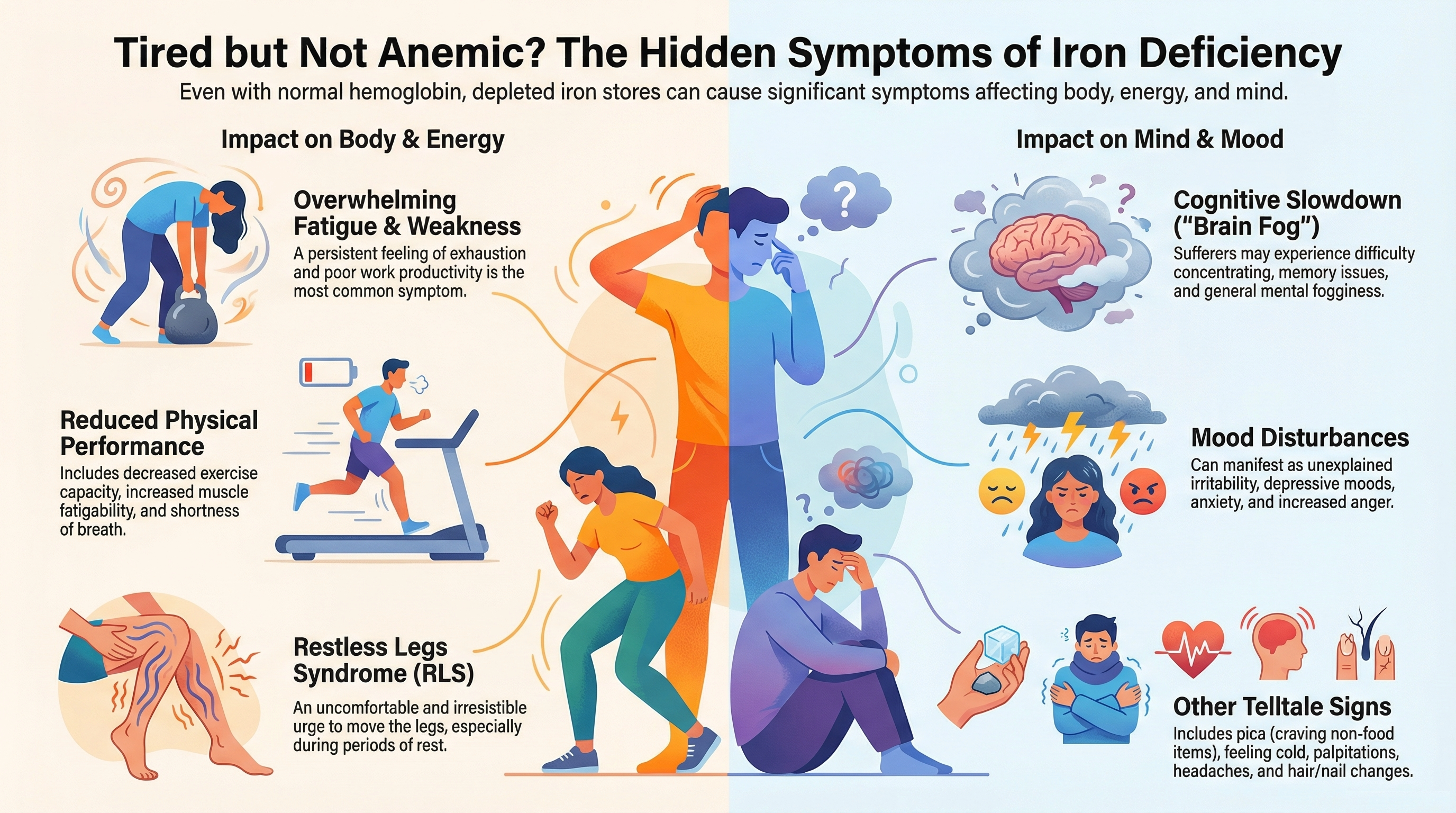
Common Signs & Symptoms
- Persistent energy crashes and difficulty concentrating
- Restless legs, muscle aches, or exercise intolerance
- Frequent headaches, palpitations, or cold intolerance
- Notable hair loss, brittle nails, or dry skin
- Worsening mood, irritability, or anxiety
Absolute vs. Functional Iron Deficiency
Absolute iron deficiency means depleted iron stores—often reflected by low ferritin when inflammation is not confounding. Functional iron deficiency means iron is sequestered (for example in storage cells) and not delivered well to the marrow, frequently related to chronic inflammation and higher hepcidin. In those situations ferritin can be normal or elevated while transferrin saturation stays low. Heart failure, chronic kidney disease, and inflammatory bowel disease are examples where this pattern appears. Treatment decisions should be made with your specialist; IV iron is commonly discussed when oral iron fails or is inappropriate—but every case is individualized.
Special Situations Your Clinician May Discuss
Medical literature highlights a few settings where identifying IDWA matters even without anemia:
- Pregnancy: Early depleted stores can progress to anemia later in pregnancy and affect maternal and fetal iron nutrition; screening and treatment timing are guided by OB or MFM.
- Planned surgery: Preoperative iron deficiency (with or without anemia) is linked to higher transfusion need and slower recovery in some studies; correcting iron beforehand is a growing focus of “patient blood management.”
- Chronic disease: In conditions like heart failure, treating iron deficiency may improve symptoms and exercise tolerance even when hemoglobin is not classically “low.”
These are general educational points only—not a substitute for your own doctor’s plan.
Oral vs. IV Iron: Choosing the Right Path
We start with a nutrition-focused approach whenever possible—optimizing heme iron intake, pairing iron-rich meals with vitamin C, and timing supplements to avoid absorption blockers. If you want a meal-by-meal playbook, visit our companion article Can Diet Fix Iron Deficiency Anemia?. Many patients still need medicinal support to reach ferritin targets and feel better.
Oral Iron Therapy
- Ideal for mild deficiencies and maintenance once ferritin is restored.
- Alternate-day dosing improves absorption and reduces side effects.
- Best absorbed on an empty stomach away from calcium, coffee, or tea.
IV Iron Infusions
- Bypasses the gut when absorption is impaired or inflammation blocks uptake.
- Delivers a full iron dose quickly with symptom relief often within weeks.
- If you have a history of celiac disease, inflammatory bowel disease, gastric bypass, you may respond best to IV iron therapy that bypasses the gut entirely.
Quick Knowledge Check
Test your understanding the way our clinical team educates patients:
A 40-year-old patient has chronic fatigue, normal hemoglobin, and a ferritin of 25 μg/L. What ferritin target best supports symptom resolution with iron therapy?
Answer: Achieve Ferritin >100 μg/L
Diagnostic cutoffs identify deficiency at ferritin <30 μg/L, but symptom resolution—especially for chronic fatigue, restless legs, and brain fog—typically requires replenishing stores above 100 μg/L. Clinical case series show that stopping iron when ferritin is ~30 μg/L leads to relapse, whereas maintaining ferritin >100 μg/L sustains improvements.
Explore the latest data on iron status trends in US adults: JAMA Network Open: Absolute and Functional Iron Deficiency in the US (2024).
Why Ferritin Targets Matter
Ferritin is more than a number—it reflects how much iron is stored for future use. Even when hemoglobin appears normal, ferritin under 30 μg/L signals depleted reserves that disrupt enzyme activity, neurotransmitter balance, and mitochondrial energy production. Studies and clinical experience demonstrate that patients continue to struggle with fatigue and neurocognitive symptoms until ferritin surpasses 100 μg/L, especially if their deficiency developed slowly.
Research Reference
National data confirm that iron deficiency without anemia affects 11-15% of US adults. Review the full analysis in JAMA Network Open (2024) to understand how absolute and functional iron deficiency patterns differ by age, sex, and chronic disease.
Further Reading (Independent Medical Sources)
For deeper, clinician-oriented context, these open references align with themes on this page—definitions, epidemiology, diagnosis with inflammation, and when IV iron enters the discussion:
- Al-Naseem A, et al. “Iron deficiency without anaemia: a diagnosis that matters.” Clinical Medicine (2021)—overview of IDWA prevalence, labs (ferritin, TSAT), pregnancy, and perioperative relevance.
- Castelo-Branco C, Quintas L. “Iron deficiency without anemia: indications for treatment.” GREM (2020)—review of symptoms (including fatigue, cognition, restless legs) and treatment lines.
- Patient.info professional reference: Non-anaemic iron deficiency—practical summary of causes, workup, and oral vs parenteral iron.
- Healthline: Iron deficiency without anemia—patient-friendly overview (medically reviewed).
- NIH ODS: Iron fact sheet for health professionals—dietary requirements and absorption factors.
Frequently Asked Questions
What is iron deficiency without anemia?
It means iron stores and/or usable iron are low, but hemoglobin has not dropped below anemia cutoffs. Tissues can still be iron-limited, so symptoms are possible.
What is functional iron deficiency?
Iron may be present in storage but not released well to marrow and other tissues—often with inflammation and low transferrin saturation. It needs careful interpretation with your clinician.
Can ferritin look normal and I still be iron deficient?
Yes, when ferritin is falsely “normal” or high because of infection or chronic inflammation. That is why doctors may order TSAT, CRP, or other tests—not ferritin alone.
Why do some clinicians aim for ferritin above 100 μg/L?
Symptom relief for some patients tracks with deeper repletion of stores, not only crossing the lab’s “not deficient” line. Targets vary by guideline, condition, and clinician judgment.
When is IV iron considered for IDWA?
Often when oral iron is not tolerated, not absorbed (GI disease, after bariatric surgery), blocked by inflammation, or when faster repletion is needed for symptoms or a procedure—always per referring provider orders.
Serving Northeast Ohio Communities
CarePoint Infusion supports patients navigating complex iron deficiency from our Beachwood center. We welcome referrals and self-referrals from throughout Northeast Ohio:
Ready to address lingering fatigue and brain fog? Call 216-755-4044 or contact us online to schedule your iron deficiency consultation.
To understand the underlying causes of iron deficiency—including blood loss, malabsorption, inadequate diet, increased demand, and chronic disease—visit our comprehensive guide on the top 5 causes of iron deficiency.
Medical Disclaimer: This information is for educational purposes only and should not replace professional medical advice. Always consult with a qualified healthcare provider for diagnosis and treatment of medical conditions. Individual results may vary.