Non-Pharmacological Interventions for Bone Health
Optimizing Skeletal Integrity Through Nutrition, Exercise, and Lifestyle
Key Summary
Non‑pharmacological care (nutrition, targeted exercise, fall prevention, lifestyle modification, and safe supplementation) is essential for optimizing bone health and reducing fracture risk in adults with or at risk for osteoporosis. Implement a personalized program combining weight‑bearing and resistance exercise, adequate calcium and vitamin D intake, fall‑risk reduction, smoking cessation, and alcohol moderation as first‑line measures.
Introduction: The Foundation of Bone Health
Osteoporosis, a systemic skeletal disease characterized by low bone mass and microarchitectural deterioration of bone tissue, represents a significant global public health challenge. While pharmacological agents remain the cornerstone of treatment for high-risk patients, non-pharmacological interventions (NPIs) are not merely adjunctive—they constitute the foundational standard of care for all patients and the primary therapeutic modality for millions with osteopenia or those unable to tolerate pharmacotherapy.
At CarePoint Infusion Center, serving Cleveland, Beachwood, and communities throughout Northeast Ohio, we recognize that comprehensive bone health management requires a multimodal approach. This guide provides evidence-based information on non-pharmacological strategies that can slow bone loss, improve bone quality, reduce falls, and enhance overall musculoskeletal health.
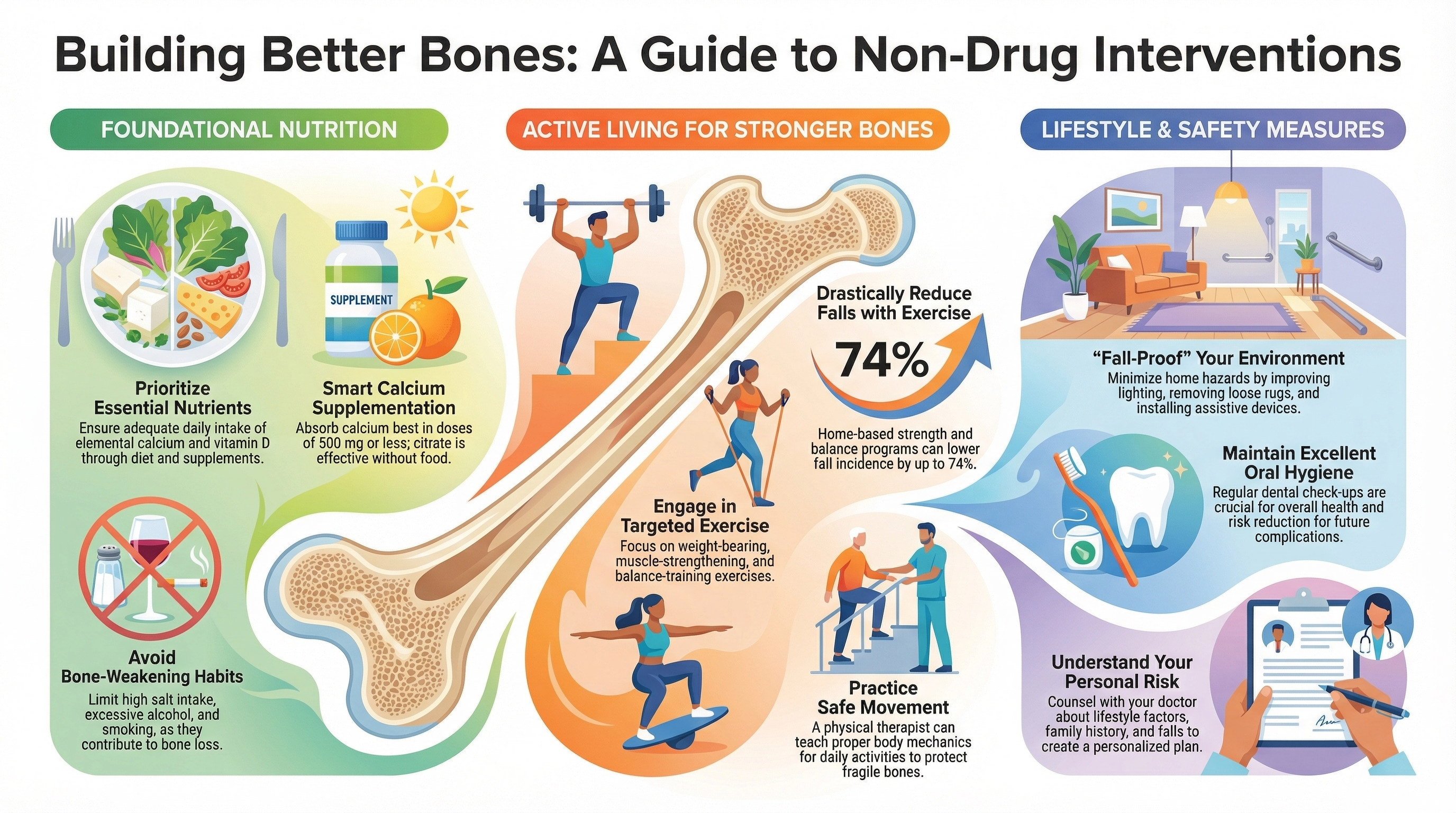
Comprehensive guide to non-pharmacological interventions for bone health
Decision Guide and Key Considerations
When implementing non-pharmacological interventions, consider the following factors:
Patient Factors
Age, sex, fracture history, mobility level, and comorbidities (e.g., diabetes, sarcopenia) all influence the approach to bone health optimization.
Treatment Goals
Increase bone strength, preserve muscle mass, reduce falls, and improve balance and functional capacity.
Available Resources
Access to physiotherapy, community exercise programs, nutrition counseling, and home safety services in Cleveland and Northeast Ohio.
Monitoring
Baseline DXA when indicated, functional tests (gait, balance), vitamin D status, and adherence tracking.
Comparative Overview of Interventions
| Intervention | Primary Benefit | Evidence Strength | Practical Actions |
|---|---|---|---|
| Weight‑bearing exercise | Stimulates bone formation | High; consistent guideline support | Walking, jogging, stair climbing; 3–5×/week |
| Resistance training | Increases BMD and muscle mass | High | Supervised progressive resistance 2–3×/week |
| Balance and functional training | Reduces falls | Moderate–high | Tai chi, balance drills, physiotherapy |
| Nutrition (dietary calcium) | Supports bone mineralization | Strong guideline support | Aim ≥700 mg/day from diet; supplement if needed |
| Vitamin D optimization | Improves calcium absorption, muscle function | Strong for deficiency correction | 800 IU/day for at‑risk groups or as tested |
| Fall prevention and home safety | Lowers fracture incidence | High for multifactorial programs | Home hazard removal; vision, footwear, medication review |
| Lifestyle changes | Reduces ongoing bone loss | Moderate | Smoking cessation; limit alcohol |
1. Nutritional Optimization
Adequate intake of bone-building nutrients is critical for skeletal health. The historical focus on calcium alone has evolved into a systems biology approach that recognizes the interdependence of macronutrients, micronutrients, and the microbiome.
Calcium: The Structural Prerequisite
Goal: 1,000–1,200 mg/day from diet and supplements if needed.
Key Sources of Calcium
- Dairy products: Milk, yogurt, cheese
- Fortified plant milks: Almond, soy, oat milk
- Leafy greens: Kale, bok choy (note: spinach has low bioavailability due to oxalates)
- Canned fish: Sardines, salmon with bones
- Calcium-set tofu
Important: Distribute intake throughout the day (≤500 mg per dose for optimal absorption). Encourage dietary sources first, as dietary calcium is absorbed more gradually than bolus supplements.
Medications That Affect Calcium Absorption
Proton Pump Inhibitors (PPIs) and Calcium Bioavailability:
A major concern regarding the long-term use of proton pump inhibitors (PPIs) is their potential impact on bone health. PPIs cause profound gastric acid suppression, which may reduce calcium bioavailability. This occurs because:
- Calcium carbonate (the most common form of calcium supplement) requires gastric acid for optimal absorption
- When PPIs suppress acid production, calcium absorption can be significantly impaired
- Long-term PPI use has been associated with an increased risk of hip fractures, particularly in older adults
Recommendations for PPI Users:
- Consider calcium citrate supplements instead of calcium carbonate, as citrate does not require gastric acid for absorption
- Ensure adequate vitamin D intake to support calcium absorption
- Discuss PPI use and bone health monitoring with your healthcare provider
- If possible, use the lowest effective PPI dose or consider alternative treatments for acid reflux
Other medications that may affect bone health include long-term corticosteroids, certain anticonvulsants, and some cancer treatments. Always review your medications with your healthcare provider.
Vitamin D: The Genomic Regulator
Goal: Serum 25(OH)D level ≥ 30 ng/mL (75 nmol/L). Maintenance dose typically 800–2000 IU/day; higher doses may be needed for deficiency.
Vitamin D Sources and Function
- Sunlight exposure: 10-30 minutes, several times/week, arms/legs exposed
- Fatty fish: Salmon, mackerel
- Egg yolks
- Fortified foods: Milk, cereals, orange juice
- Supplementation: Often necessary, especially in Northeast Ohio where winter months limit sun exposure
Role: Essential for intestinal calcium absorption and bone mineralization. Without adequate Vitamin D, intestinal calcium absorption drops to 10–15%, triggering secondary hyperparathyroidism and bone loss.
Protein: Anabolic Support
Goal: Adequate intake (0.8-1.0 g/kg body weight; higher for older adults or malnourished, up to 1.0–1.2 g/kg).
Debunking the Acid-Ash Hypothesis
The historical "Acid-Ash Hypothesis" suggested that high protein intake increases systemic acid load, causing bone loss. Modern scientific consensus has largely dismantled this theory. Higher protein intakes are actually associated with higher BMD and reduced risk of hip fracture, particularly in the elderly. Protein is vital for muscle mass maintenance (reducing sarcopenia and fall risk) and provides the collagen matrix for bone.
Vitamin K2: The Synergistic Activator
Vitamin K2 (menaquinones) acts as an essential partner to Vitamin D. While Vitamin D stimulates the production of bone proteins, Vitamin K is required for their activation through carboxylation.
How Vitamin K2 Works
- Osteocalcin activation: Carboxylated osteocalcin binds calcium ions with high affinity, embedding them into the hydroxyapatite lattice
- Matrix Gla-Protein (MGP): Prevents calcium from depositing in arteries and directs it toward bone
- Sources: Fermented foods (natto), cheese, supplements (MK-7 form has longer half-life)
Meta-analyses indicate that combined administration of Vitamin D and Vitamin K increases total Bone Mineral Density (BMD) more effectively than either nutrient alone.
Other Key Nutrients
- Magnesium: 60% of the body's magnesium resides in bone. Essential for calcium transport and Vitamin D activation. Sources: nuts, seeds, whole grains, leafy greens.
- Potassium: Found in fruits and vegetables; supports bone metabolism.
- Vitamin C: Essential for collagen synthesis. Deficiency leads to defective matrix and bone fragility.
Nutritional Antagonists
- Excessive sodium: Limit to <2,300 mg/day. High salt intake increases urinary calcium excretion.
- High caffeine: Up to 400 mg/day (≈4 cups coffee) is generally safe if calcium intake is adequate.
- Excessive alcohol: Limit to ≤1 drink/day for women, ≤2 for men. Heavy use is detrimental to bone.
2. Physical Activity and Exercise Prescription
Physical activity is the only physiological mechanism capable of inducing new bone formation (osteogenesis) and improving the structural geometry of bone. However, the osteogenic potential of exercise is highly specific to the strain magnitude, strain rate, and strain frequency applied.
Reduction in fall incidence with home-based strength and balance programs
High-Intensity Resistance and Impact Training (HiRIT)
The landmark LIFTMOR (Lifting Intervention for Training Muscle and Osteoporosis Rehabilitation) trial demonstrated that High-Intensity Resistance and Impact Training is both safe and superior for building bone in postmenopausal women with low bone mass.
The LIFTMOR Protocol
- Frequency: Twice weekly for 30 minutes
- Resistance Exercises: Deadlift, Overhead Press, Back Squat
- Intensity: High intensity (>80–85% of 1-Repetition Maximum)
- Volume: 5 sets of 5 repetitions
- Impact Loading: Jumping chin-ups with drop landings
Results: Significantly greater improvements in lumbar spine (+2.9%) and femoral neck (+0.3%) BMD compared to low-intensity controls who actually lost bone.
Safety Note: This protocol requires strict supervision (1:8 instructor-to-participant ratio) and should not be attempted without professional guidance, especially for individuals with existing vertebral fractures.
Weight-Bearing Aerobic Exercise
Examples
Brisk walking, hiking, stair climbing, dancing, tennis
Frequency: ≥ 30 minutes, most days of the week
Note: Swimming and cycling, while excellent for cardiovascular health, are not weight-bearing for bones.
Progressive Resistance Training
Free weights, resistance bands, weight machines, bodyweight exercises (squats, lunges, push-ups)
Protocol: 2-3 times/week, targeting major muscle groups
Intensity: Moderate-to-high (70-85% of 1-repetition maximum), 8-12 repetitions per set
Balance and Functional Training
Tai Chi (highly evidence-based), heel-to-toe walking, single-leg stands, functional movements
Frequency: Daily or 2-3 times/week
Purpose: Critical for fall prevention and reducing kyphosis
Safety Considerations
Patients with severe osteoporosis (especially vertebral fractures) should avoid:
- High-impact activities
- Deep forward flexion (sit-ups, crunches, toe touches)
- Spinal twisting
Consultation with a physical therapist specializing in osteoporosis is highly recommended for safe, individualized exercise prescription.
3. Fall Prevention: The "STEADI" Pillar
Since 90% of hip fractures result from a fall, preventing the fall is clinically equivalent to strengthening the bone. The CDC's STEADI (Stopping Elderly Accidents, Deaths & Injuries) initiative provides a standardized framework for clinicians and patients.
Multifactorial Fall Risk Assessment
Key Screening Tools
- Timed Up & Go (TUG) test: Measures functional mobility
- 30-Second Chair Stand test: Assesses lower body strength
- Medication review: Identify "fall-risk" medications (benzodiazepines, sedatives, antihypertensives causing orthostatic hypotension)
- Vision and hearing checks: Regular assessments are essential
Environmental Modification
Home Safety Checklist
- Remove loose rugs and clutter
- Ensure adequate lighting (especially night lights)
- Install grab bars in bathrooms
- Install railings on both sides of stairs
- Use non-slip mats in shower/bath
- Remove electrical cords from walkways
Personal Strategies
- Wear sturdy, low-heeled shoes with non-slip soles
- Regular vision and hearing checks
- Review medications with pharmacist/doctor
- Consider hip protectors for high-risk individuals
- Use assistive devices when needed
Occupational therapy home assessments are highly effective, reducing fall risk by 26–40%. In Cleveland, Beachwood, and throughout Northeast Ohio, many healthcare providers offer home safety evaluation services.
4. Lifestyle and Behavioral Modifications
Essential Lifestyle Changes
- Smoking Cessation: Smoking is toxic to osteoblasts and accelerates bone loss. Cessation support is crucial and available throughout Northeast Ohio.
- Alcohol Moderation: Limit to ≤1 drink/day for women and ≤2 drinks/day for men. Heavy use is detrimental to bone health.
- Maintain Healthy Body Weight: Underweight (BMI <18.5) is a major risk factor for osteoporosis and fracture. Avoid excessive weight loss diets without preserving muscle.
- Sleep and Stress Management: Emerging research links circadian disruption and chronic stress (elevated cortisol) to bone health. Adequate sleep and stress reduction strategies may support bone health.
5. Implementation and Multidisciplinary Approach
Effective implementation of non-pharmacological interventions requires a team approach:
Physician/Endocrinologist
Diagnosis, risk assessment, and overall treatment plan coordination.
Registered Dietitian
Personalized nutrition assessment and plan to meet calcium, vitamin D, and protein targets.
Physical Therapist
Safe, individualized exercise prescription and fall prevention training.
Occupational Therapist
Home safety assessment and adaptive strategies for daily activities.
Pharmacist
Medication review, supplement advice, and fall-risk medication identification.
Nurse Educator
Patient coaching, education, and follow-up support.
Monitoring and Follow-Up
Start with assessment (fracture risk, mobility, nutrition, vitamin D level) and set measurable goals. Reassess function and adherence every 3–12 months; repeat DXA per guideline intervals when indicated. Patient empowerment through education is vital for long-term adherence.
Summary of Key Recommendations
| Intervention Category | Key Recommendations |
|---|---|
| Nutrition |
|
| Exercise |
|
| Lifestyle |
|
| Fall Prevention |
|
Serving Northeast Ohio Communities
CarePoint Infusion Center provides comprehensive bone health education and support throughout Northeast Ohio. We serve patients from Cleveland, Beachwood, Akron, and surrounding communities in Cuyahoga County and beyond.
We conveniently serve patients from:
And throughout Cuyahoga County and Northeast Ohio. Contact us today to learn more about optimizing your bone health.
Take the Next Step
Non-pharmacological interventions form the essential foundation of osteoporosis management. A comprehensive, patient-centered program integrating targeted nutrition, tailored exercise, and rigorous fall prevention can significantly reduce fracture risk, improve quality of life, and work synergistically with pharmacotherapy when indicated.
At CarePoint Infusion Center, we are committed to providing evidence-based information and support for bone health optimization. Our experienced team can help you understand these interventions and coordinate with your healthcare providers to develop a personalized plan.
Contact us today:
- Phone: 216-755-4044
- Address: 23215 Commerce Park Suite 318, Beachwood, OH 44122
- Hours: Monday-Friday, 9:00 AM - 5:00 PM
Visit our Contact page to send us a message or request an appointment.
Additional Resources
Learn more about bone health and osteoporosis treatment:
- Osteoporosis treatment overview - Infusion and injectable therapies (Reclast, Prolia, Evenity)
- Reclast (Zoledronic Acid) - Annual IV bisphosphonate option
- Prolia (Denosumab) for Osteoporosis - Comprehensive guide to pharmacological treatment
- Infusion Services - Learn about our comprehensive infusion services
- Patients / Guests - Information for patients and their families
- About Us - Meet our team and learn about our facility
Disclaimer
This information is for educational purposes only and is not a substitute for professional medical advice, diagnosis, or treatment. Always consult with a qualified healthcare provider familiar with your specific medical history and risk profile before making changes to your diet, exercise routine, or lifestyle. All interventions should be undertaken in consultation with your healthcare team.