Prolia (Denosumab) for Osteoporosis
Biannual Injection Therapy
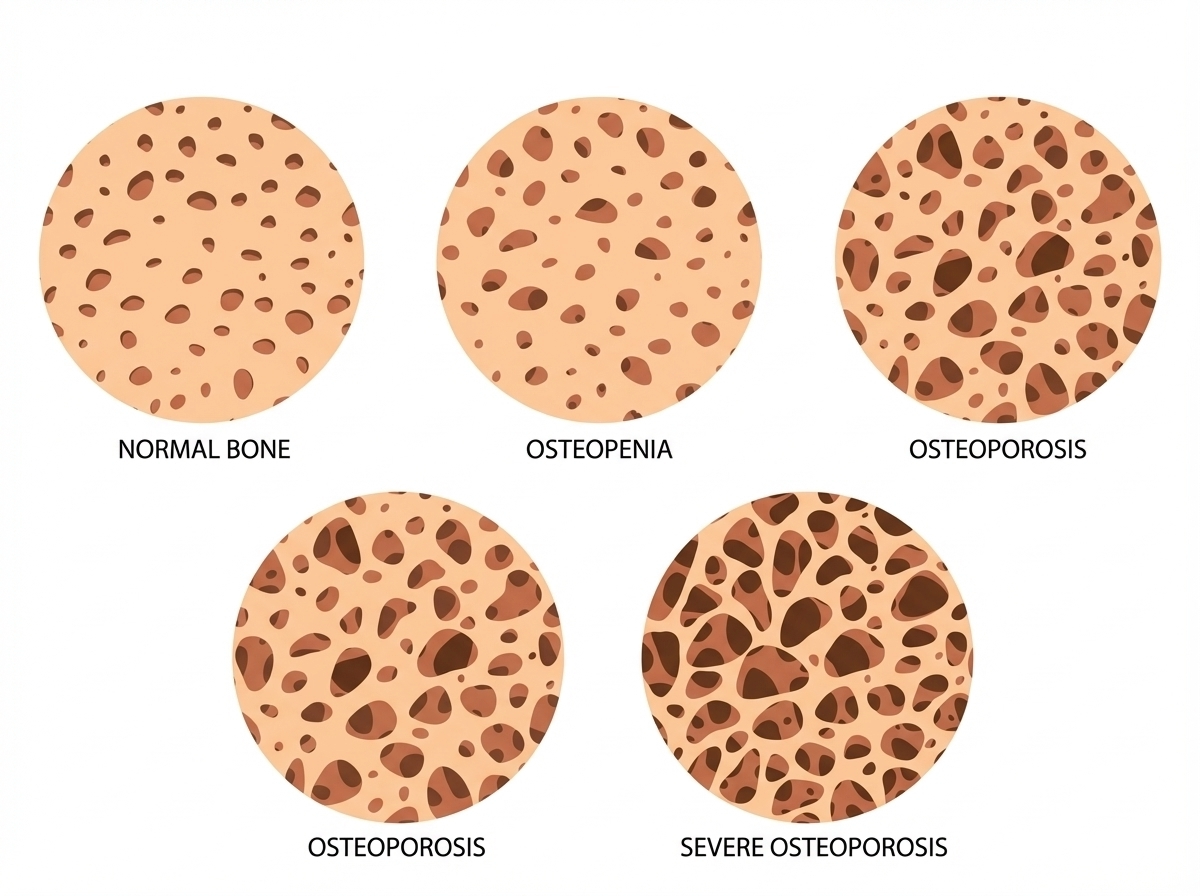
Understanding Osteoporosis
Osteoporosis is a progressive bone disease characterized by decreased bone mass and deterioration of bone tissue microstructure. This condition leads to increased bone fragility and a higher risk of fractures, particularly in the hip, spine, and wrist. The name "osteoporosis" literally means "porous bones," reflecting the loss of bone density that makes bones look like honeycomb structures under a microscope.
Healthy bone is a dynamic, living tissue that constantly undergoes a process called remodeling. This involves osteoblasts (cells that build new bone), osteoclasts (cells that break down old bone), and osteocytes (mature bone cells that maintain bone structure). In a healthy skeleton, bone formation and bone resorption (breakdown) occur in balance, completely renewing the entire human skeleton approximately every decade. However, when bone resorption exceeds bone formation, osteoporosis develops, leading to weakened bones that fracture more easily.
Americans currently have osteoporosis
of women over age 50 will experience an osteoporosis-related fracture in their lifetime
Risk Factors Affecting Bone Health
Factors Associated with Low Bone Mass
- Demographic factors: Female sex, Caucasian or Asian ethnicity
- Lifestyle factors: Sedentary lifestyle, immobility, low body weight (<125 lbs)
- Nutritional factors: Low calcium intake throughout life, vitamin D deficiency, malnutrition
- Reproductive factors: Weight loss (>10% of weight at age 25), nulliparity (never having given birth)
- Medical conditions: Gastrointestinal disorders, malabsorption syndrome, hypoparathyroidism
- Medication use: Long-term corticosteroid use, certain other medications
Understanding T-Scores
The World Health Organization (WHO) uses T-scores to classify bone health:
- Normal: T-score greater than -1.0
- Osteopenia (Low bone mass): T-score between -1.0 and -2.5
- Osteoporosis: T-score less than -2.5
- Severe osteoporosis: T-score less than -2.5 with fracture history
T-scores represent the number of standard deviations your bone density differs from that of a healthy 30-year-old adult.
What is Prolia?
Prolia (generic name: denosumab) is a groundbreaking medication for treating osteoporosis. It represents a novel approach to preventing bone loss through a unique mechanism of action that differs from traditional bisphosphonate medications like alendronate (Fosamax). For a broader overview of bone-loss treatment paths at CarePoint, see our osteoporosis treatment hub; for annual IV zoledronic acid, see Reclast (zoledronic acid).
Key Characteristics
- Drug class: Human monoclonal antibody, RANKL inhibitor
- Formulation: Injectable solution (60 mg/mL in a 1 mL prefilled syringe or vial)
- Administration: Subcutaneous injection given once every 6 months
- FDA approval: Granted for high-risk osteoporosis patients
- Molecular weight: Approximately 147 kDa
Mechanism of Action
Unlike traditional bisphosphonates that work through physicochemical interactions with bone mineral, denosumab selectively blocks the molecular signaling pathway essential for osteoclast-mediated bone resorption. This represents a more targeted immunological approach.
How Long Does It Work?
Duration of Action:
- Bone resorption markers show:
- 85% reduction within 3 days
- Maximum reduction by 1 month
- 39-68% of patients have undetectable bone resorption markers at 1-3 months
Important Note
The effects of Prolia are reversible and wear off quickly after discontinuation, which is why consistent dosing every 6 months is critical.
Clinical Indications
1. Postmenopausal Women with Osteoporosis
At high risk for fracture, including those who:
- Have a history of osteoporotic fracture
- Have multiple risk factors for fracture
- Have failed or are intolerant to other osteoporosis therapies
2. Men with Osteoporosis
At high risk for fracture
3. Glucocorticoid-Induced Osteoporosis
In men and women taking corticosteroid medications (like prednisone) for at least 6 months and at high risk for fracture
4. Bone Loss in Men Receiving Androgen Deprivation Therapy
For non-metastatic prostate cancer
5. Bone Loss in Women Receiving Aromatase Inhibitor Therapy
For non-metastatic breast cancer
Clinical Trial Evidence: What Were the Main Benefits?
FREEDOM Trial (Fracture Reduction Evaluation of Denosumab in Osteoporosis Every Six Months)
This landmark international study enrolled 7,868 postmenopausal women with osteoporosis over 36 months.
Participant Characteristics
- Mean age: 72.3 years
- Baseline T-scores: Lumbar spine -2.8, total hip -1.9, femoral neck -2.2
- 24% had a baseline vertebral fracture
Primary Results - Risk Reductions
| Fracture Type | Incidence with Prolia | Incidence with Placebo | Risk Reduction |
|---|---|---|---|
| Vertebral | 2.3% | 7.2% | 68% |
| Non-vertebral | 6.5% | 8.0% | 20% |
| Hip | 0.7% | 1.2% | 40% |
Bone Mineral Density Improvements
- Lumbar spine: 9.2% increase
- Total hip: 6.0% increase
Bone Turnover Markers
- 86% decrease in bone resorption markers at 1 month
- 72% sustained decrease at 36 months
Prolia vs. Bisphosphonates: Bone Mineral Density Comparison
Clinical research demonstrates that Prolia (denosumab) is statistically superior to bisphosphonates in increasing bone mineral density (BMD) at key skeletal sites. This superiority has been confirmed in meta-analyses of over 5,400 patients across multiple studies.
Superior BMD Gains
Compared to bisphosphonates, Prolia produces significantly greater increases in BMD at:
- Lumbar spine: 1.55% greater increase
- Total hip: 1.05% greater increase
- Femoral neck: 1.06% greater increase
- One-third radius: Also shows superior gains
Why Prolia Achieves Greater BMD Increases
1. More Potent Antiresorptive Effect:
While bisphosphonates must bind to bone mineral to be effective, Prolia is a monoclonal antibody that directly targets RANKL—the key protein that stimulates bone breakdown. By blocking RANKL, Prolia more potently inhibits the survival and differentiation of osteoclasts (bone-resorbing cells), resulting in more significant bone density improvements.
2. Continuous Improvement Over Time:
Unlike bisphosphonates, which often reach a plateau in BMD gains after a few years, long-term data show that Prolia continues to increase BMD at the lumbar spine and hip for up to 10 years of treatment. Studies have confirmed that when patients transition from bisphosphonates to Prolia, they experience significant further increases in BMD that were not achievable by continuing bisphosphonate therapy alone.
Important Clinical Note
While Prolia demonstrates superior BMD increases compared to bisphosphonates, clinical trials have shown that both treatments provide comparable fracture risk reduction during study periods. This means that while Prolia produces greater improvements in bone density measurements, both drug classes effectively reduce the risk of fractures in real-world use. The choice between treatments should be made in consultation with your healthcare provider based on your individual risk factors, medical history, and treatment goals.
How is Prolia Administered?
Administration Details
- Route: Subcutaneous injection (under the skin)
- Injection Sites: Upper arm, upper thigh, or abdomen
- Frequency: Once every 6 months (every 26 weeks)
- Who Administers: A healthcare professional in a hospital, clinic, or doctor's office
Important
Prolia must be administered by a healthcare provider; it is not for self-injection at home.
Before Each Injection
Your healthcare provider should:
- Check your calcium levels
- Assess kidney function
- Ensure you're taking adequate calcium (1,000 mg daily) and vitamin D (at least 400 IU daily)
- Perform additional blood tests 2 weeks post-injection if you have kidney problems
If You Miss a Dose
- Schedule your missed dose as soon as possible
- Resume the every-6-month schedule from that new injection date
- Missing doses can significantly increase fracture risk
How Long Does Prolia Take to Work?
Immediate Effects (Within Days)
- Bone resorption markers decrease by 85% within 3 days
- This demonstrates the drug is actively working
Short-term Effects (1-3 Months)
- Maximum reduction in bone breakdown
- Many patients show undetectable bone resorption markers
- Bone begins to strengthen
Long-term Effects (12-36 Months)
- Progressive increases in bone mineral density
- Significant fracture risk reduction becomes evident
- Continued strengthening of both cortical and trabecular bone
10-Year Data
Studies show continued efficacy and safety with sustained BMD improvements over a decade of treatment.
Adverse Effects and Safety Concerns
Common Side Effects (>5% of patients)
- Back pain
- Pain in arms and legs
- Muscle pain (myalgia)
- High cholesterol (hypercholesterolemia)
- Urinary tract infections
- Upper respiratory tract infections
- Arthralgia (joint pain)
- Nasopharyngitis (common cold symptoms)
- Headache
- Influenza
Serious Adverse Events
1. Severe Hypocalcemia (Low Blood Calcium) - BOXED WARNING
Risk increased in:
- Patients with advanced chronic kidney disease (CKD)
- Patients on dialysis
- Those with mineral and bone disorder (CKD-MBD)
- Pre-existing hypocalcemia
- Malabsorption syndromes
Symptoms to watch for:
- Muscle spasms, cramps, or twitching
- Numbness or tingling in fingers, toes, or around mouth
- Seizures (in severe cases)
Prevention:
- Correct low calcium before starting Prolia
- Take calcium 1,000 mg and vitamin D 400+ IU daily
- Monitor calcium levels regularly, especially if high-risk
2. Osteonecrosis of the Jaw (ONJ)
What it is: Exposed bone in the jaw that fails to heal for 6-8 weeks
Risk factors:
- Prior bisphosphonate therapy
- Dental surgery or tooth extraction
- Poor oral hygiene
- Cancer (breast, prostate, myeloma)
- Smoking
Prevention:
- Complete dental exam and treatments BEFORE starting Prolia
- Maintain excellent oral hygiene
- Regular dental check-ups
- Inform dentist you're taking Prolia
- Avoid invasive dental procedures if possible
3. Atypical Femoral Fractures
- Unusual fractures of the thigh bone
- May occur with minimal or no trauma
- Warning signs: Dull, aching pain in hip, groin, or thigh weeks to months before fracture
- More common with long-term use
4. Serious Infections
Increased risk of infections, including:
- Cellulitis (skin infection)
- Erysipelas
- Endocarditis (heart infection)
- Serious skin infections
Higher risk in:
- Patients taking immunosuppressant medications
- Those with compromised immune systems
5. Multiple Vertebral Fractures Upon Discontinuation
- Risk of rapid bone loss and multiple spinal fractures after stopping Prolia
- Effects wear off very quickly (within months)
- Critical: Do not stop Prolia without a transition plan to another osteoporosis medication
How to Prevent and Manage Side Effects
Hypocalcemia Prevention
- Pre-treatment assessment:
- Blood calcium level check
- Kidney function testing
- Vitamin D level assessment
- Supplementation:
- Calcium 1,000 mg daily (through diet and/or supplements)
- Vitamin D at least 400 IU daily (some patients may need 800-1,000 IU)
- Take consistently throughout treatment
- Monitoring:
- Regular blood tests before each injection
- Additional monitoring 2 weeks post-injection if high-risk
- Report symptoms immediately
Infection Prevention
- Practice good hygiene
- Avoid sick individuals when possible
- Report any signs of infection promptly:
- Fever
- Chills
- Skin redness, warmth, or swelling
- Pain or discomfort
Dental Health Maintenance
Before starting Prolia:
- Complete dental examination
- Address any dental issues
- Ensure proper denture fit
During treatment:
- Brush teeth at least twice daily
- Floss daily
- Regular dental cleanings (inform dentist about Prolia)
- Avoid elective invasive dental procedures
- Report any jaw pain, swelling, or loose teeth immediately
Important Safety Measures
- Do not suddenly stop Prolia without your doctor's guidance and a plan to transition to another bone medication
- Use effective birth control during treatment and for 5 months after the last dose
- Inform ALL healthcare providers (including dentists) that you're taking Prolia
- Report these symptoms immediately:
- New or unusual bone, joint, or muscle pain
- Jaw pain or swelling
- Signs of infection
- Symptoms of low calcium
- Thigh, hip, or groin pain
- Keep all appointments for your scheduled injections and monitoring
Serving Northeast Ohio Communities
CarePoint Infusion Center provides comprehensive osteoporosis treatment information and support throughout Northeast Ohio. We serve patients from Cleveland, Beachwood, Akron, and surrounding communities in Cuyahoga County and beyond.
We conveniently serve patients from:
And throughout Cuyahoga County and Northeast Ohio. Contact us today to learn more about osteoporosis treatment options.
Key Takeaways
Prolia is highly effective
At reducing fracture risk and increasing bone density in high-risk patients
Convenient dosing
Twice yearly dosing improves adherence compared to daily or weekly medications
Unique mechanism
Offers an alternative for patients who can't tolerate bisphosphonates
Requires commitment
To regular injections, supplementation, and monitoring
Cannot be stopped abruptly
Without transitioning to another osteoporosis medication
Special precautions needed
For patients with kidney disease, dental issues, or infection risk
Conclusion
Prolia represents a significant advancement in osteoporosis treatment, offering a unique mechanism of action that effectively reduces fracture risk through RANKL inhibition. Its convenient twice-yearly dosing and proven efficacy make it an excellent option for patients at high risk for fractures, particularly those who cannot tolerate bisphosphonates or have not responded to other treatments.
However, Prolia is not without risks, and careful patient selection, monitoring, and adherence to supplementation guidelines are essential for safe and effective use. The rapid reversibility of its effects means patients must commit to long-term treatment or have a plan to transition to alternative therapies.
Working closely with your healthcare provider, maintaining excellent dental health, ensuring adequate calcium and vitamin D intake, and incorporating bone-healthy lifestyle practices will help maximize the benefits of Prolia while minimizing potential risks.
Remember
Your osteoporosis is treatable. With proper medical care, monitoring, and lifestyle modifications, you can significantly reduce your fracture risk and maintain your quality of life.
Additional Resources
For comprehensive information on optimizing bone health through nutrition, exercise, and lifestyle modifications, see our guide to non-pharmacological bone health interventions. These evidence-based strategies work synergistically with Prolia to maximize bone strength and reduce fracture risk.
Learn about Evenity (romosozumab), a 12-month anabolic therapy for postmenopausal osteoporosis at high fracture risk. Evenity and Prolia are often used sequentially: Evenity for 12 months to rapidly build bone, followed by Prolia to maintain the gains.
Disclaimer
This information is for educational purposes only and should not replace consultation with your healthcare provider. Always discuss treatment options, risks, and benefits with your doctor before starting or stopping any medication.